The Problem
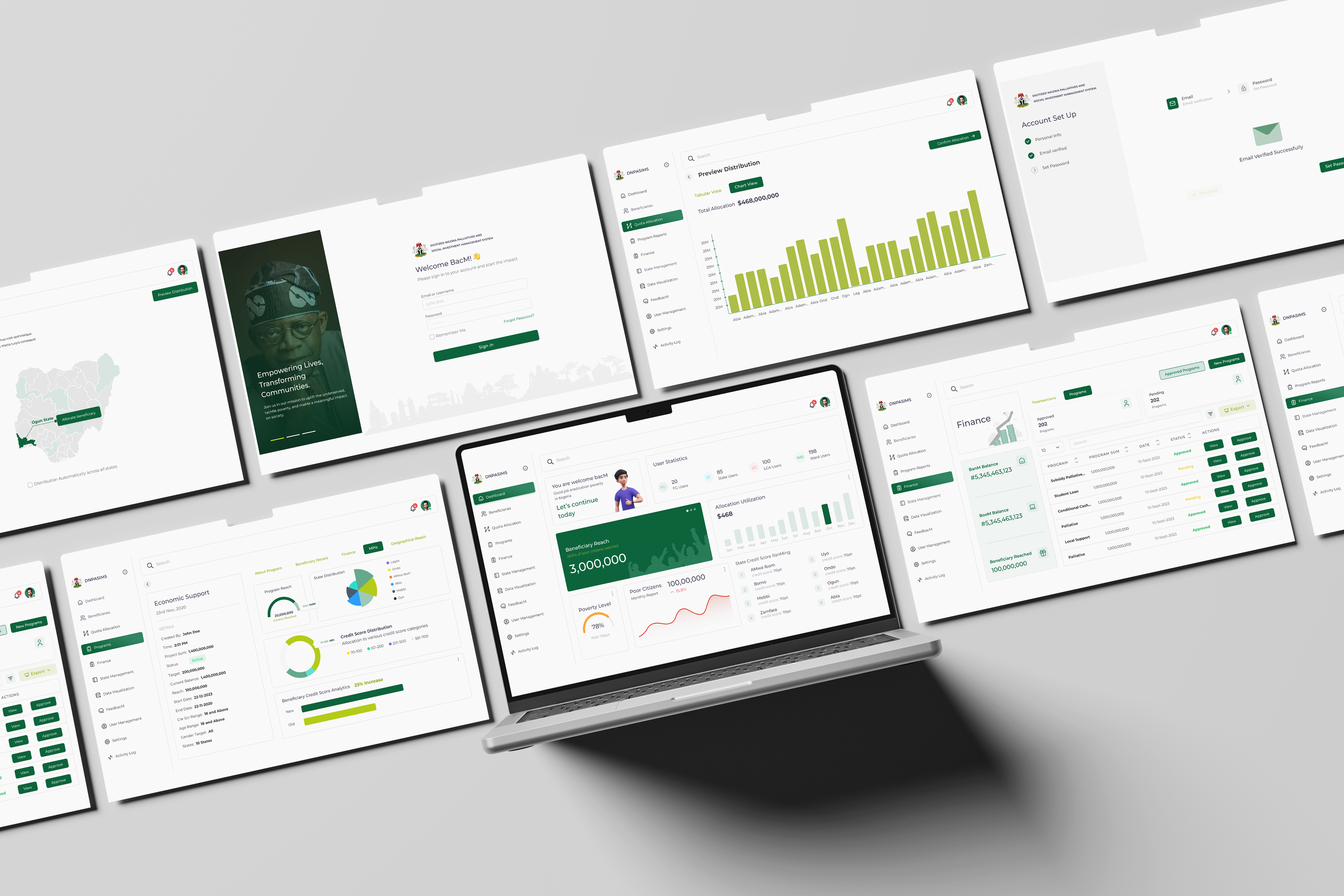
Nigeria’s palliative programs have long suffered from inability to target the poor, lack of transparency, and widespread diversion. Many vulnerable citizens are excluded from interventions, while funds meant to support them are often mismanaged due to manual system processes, non-existent accountability structures, and zero visibility for federal and state stakeholders. More importantly, there’s also no centralized system to monitor, analyze, or ensure that aid reaches the intended people..
Then The Solution
This system was designed for the government to have a secured, data-driven platform to manage, track, and analyze palliative distributions across Nigeria. With layered dashboards for federal, state, and local government users, the system supports end-to-end program creation, quota allocation, financial tracking, and beneficiary management. Every user is pre-verified and restricted to registered devices using MAC address validation. From public transparency dashboards to citizen NIN-based eligibility checks and advanced data analytics, it ensures aid flows are intelligent, auditable, and human-centered—reaching those who need them most.

Secured Account Setup & Onboarding
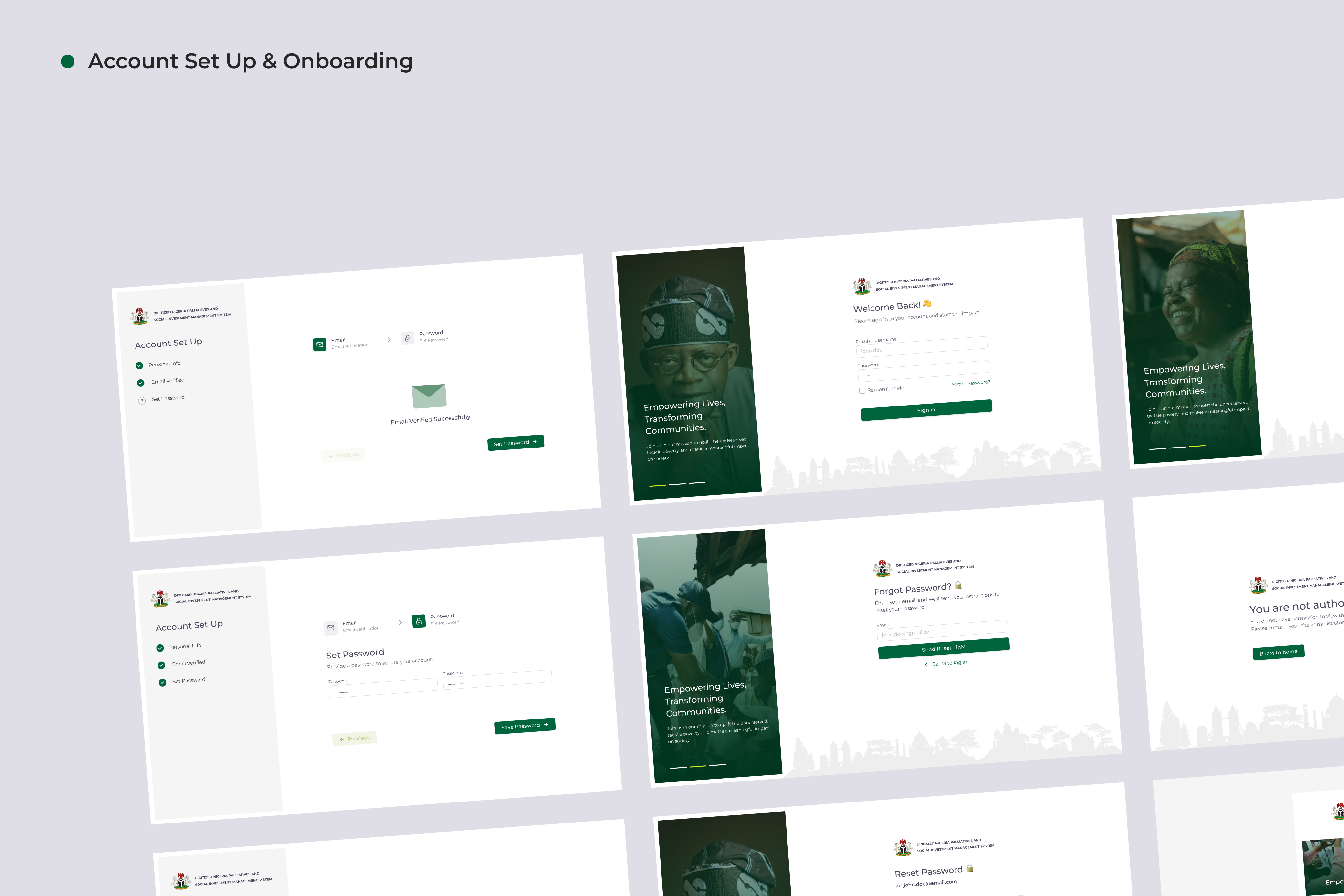
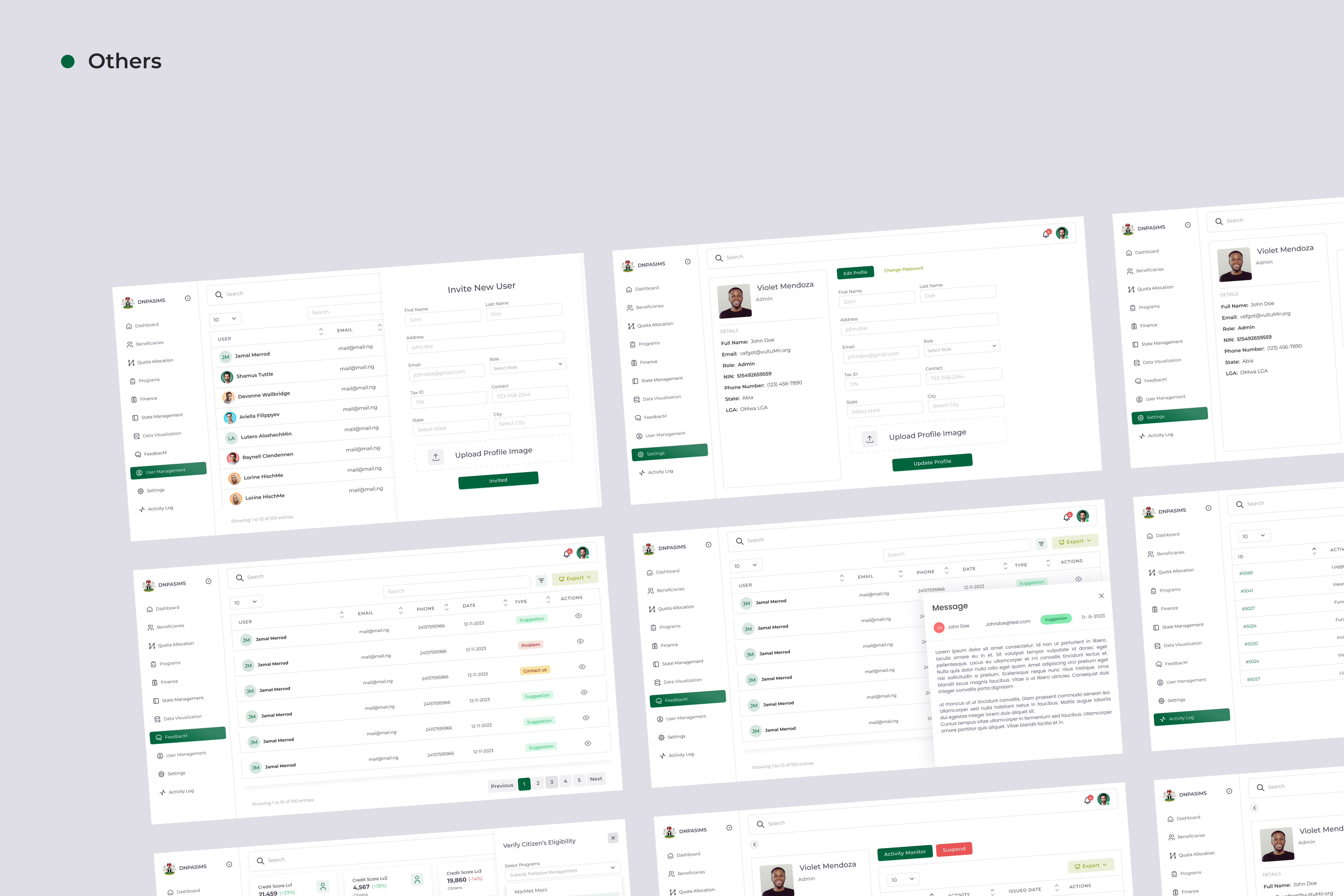
Considering, unwanted users, the system was designed to make only vetted users are onboarded from the back-end which will be linked to official government credentials. Each account is further restricted to a specific MAC address, meaning only pre-registered work devices can access the platform—even if credentials are compromised. This advanced security layer prevents unauthorized logins, reduces insider threats, and ensures each action within the system is traceable to a verified government device and personnel. These accounts cannot be created via open sign-ups and must pass a multi-step vetting process before activation.
The Dashboard
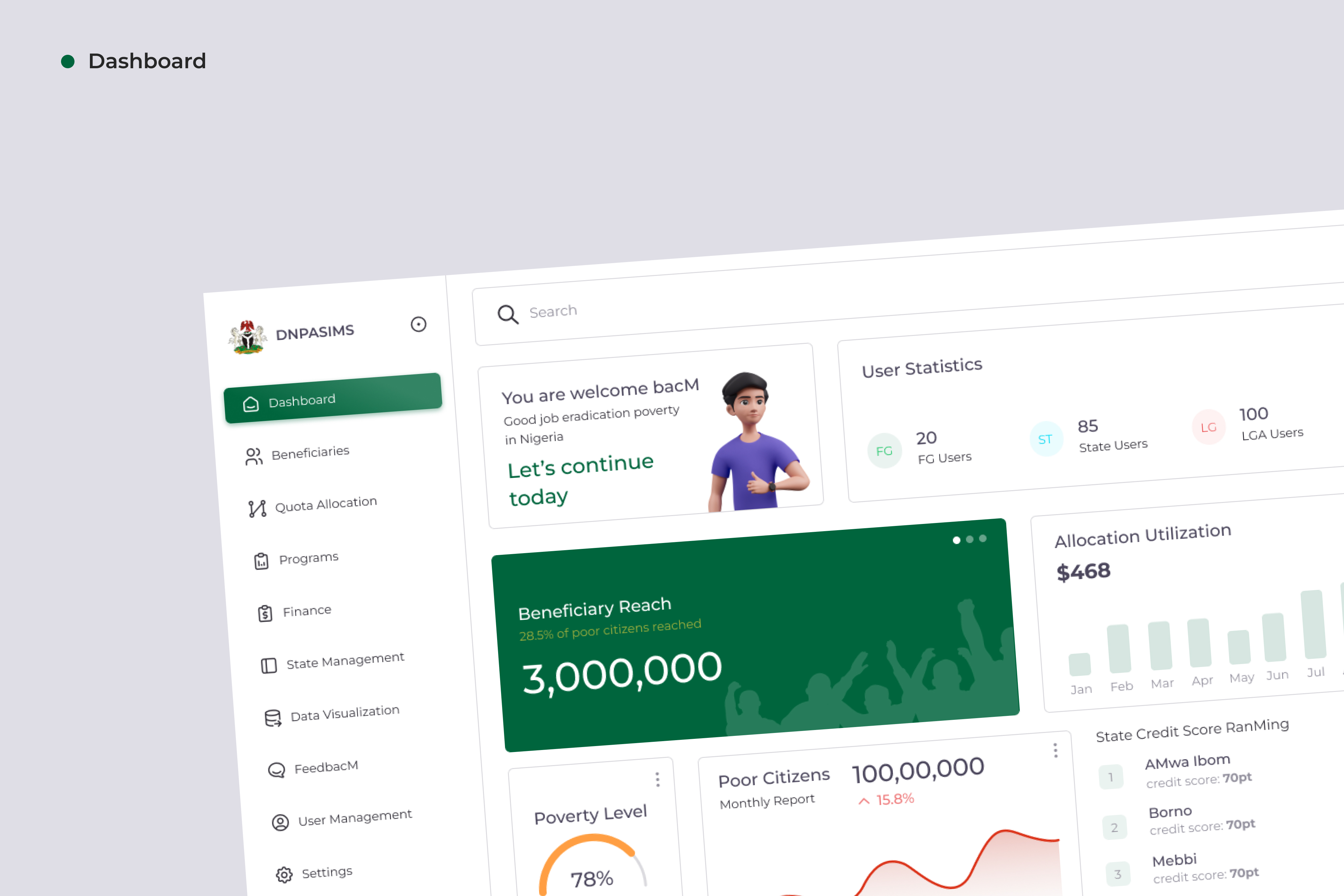
At the heart of the platform is the Dashboard, which provides an at-a-glance summary of key metrics such as total beneficiaries, palliative distribution trends, quota usage, financial summaries, and program status. This gives administrators instant visibility into how interventions are performing across states and local governments.
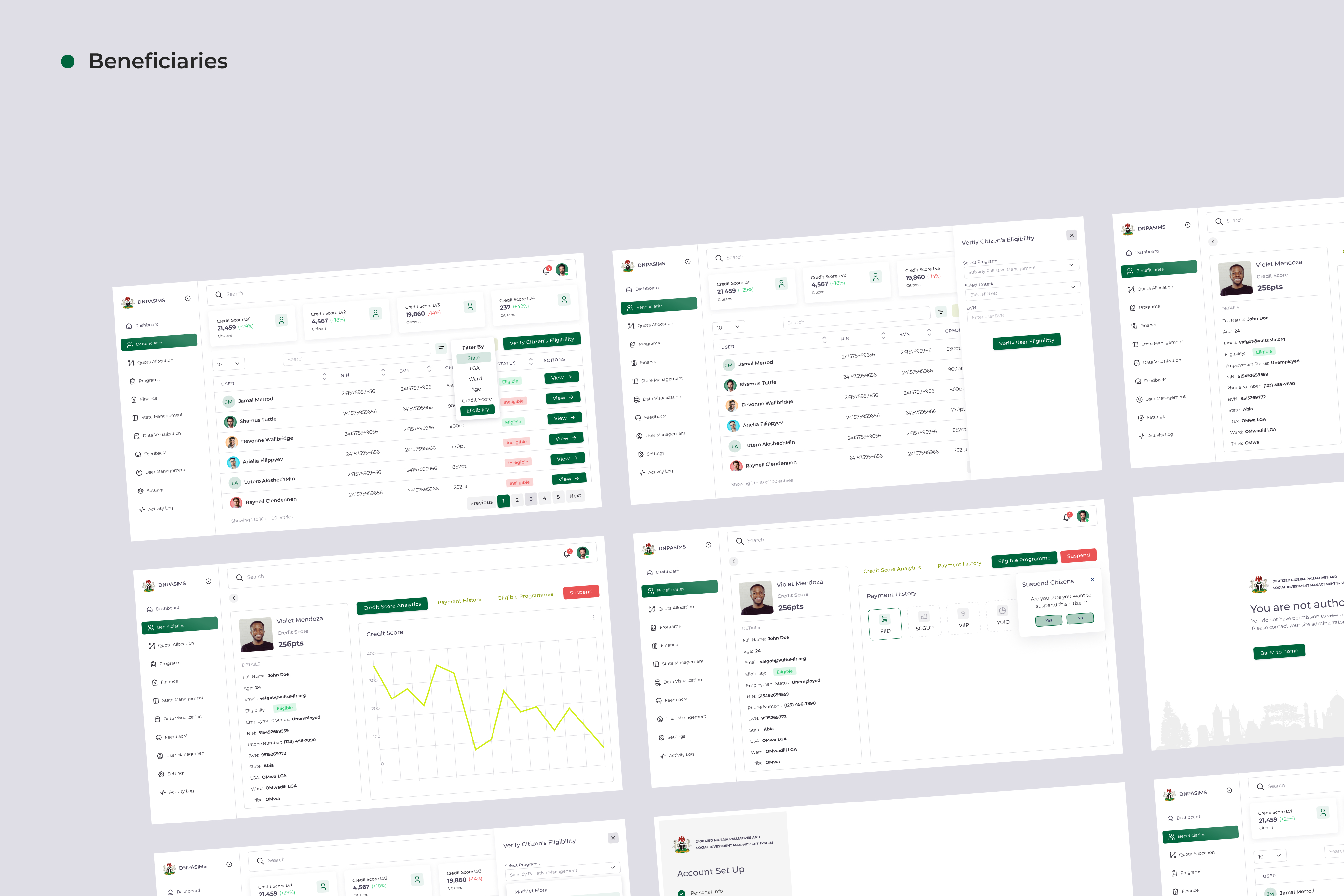
System Beneficiaries
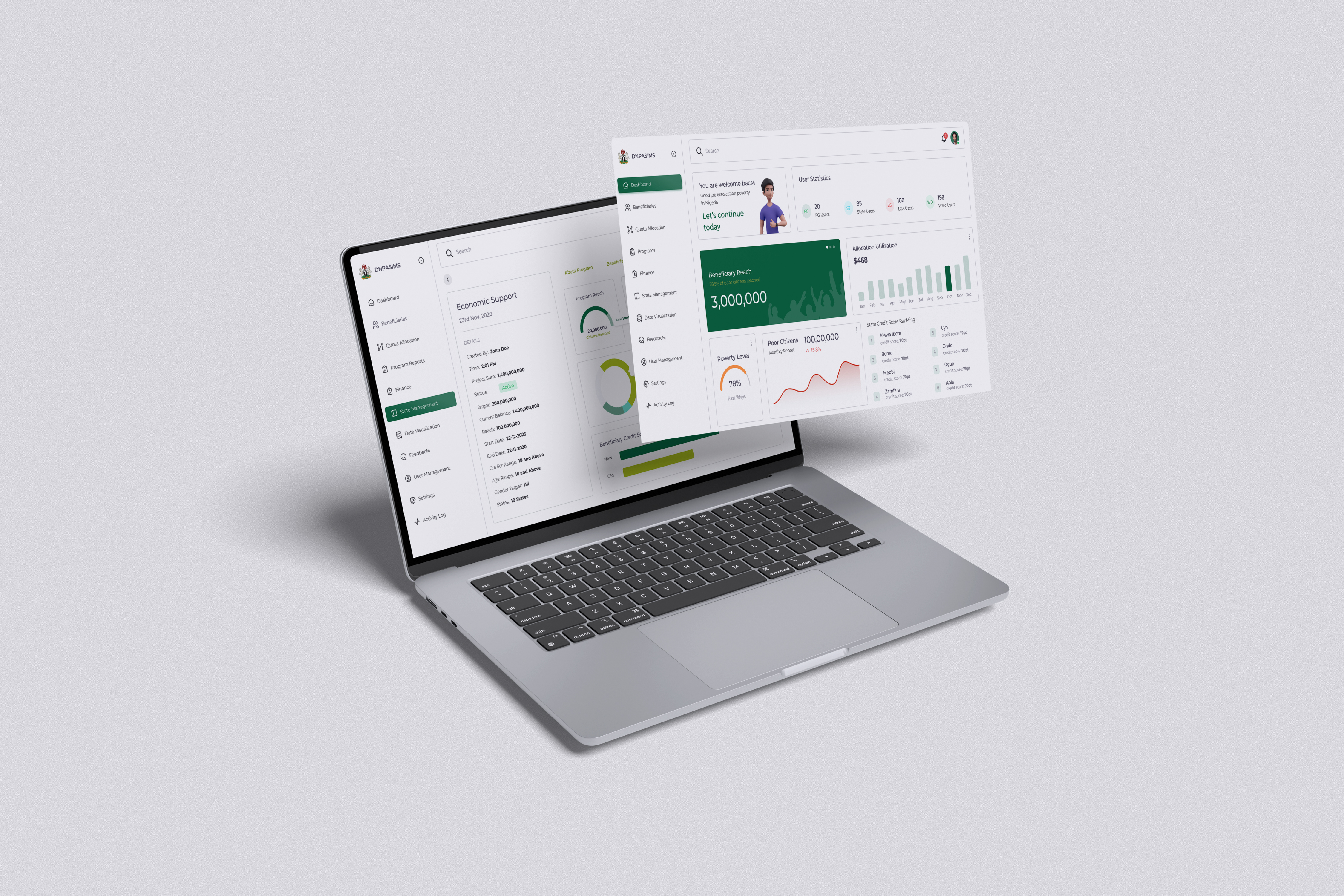
The Beneficiaries section allows users to manage citizen data, view application statuses, verify eligibility, and track the history of palliative disbursements for each individual. This section integrates with national identity records for accurate targeting and includes tools for filtering, flagging duplicates, or reviewing case-by-case support situation.
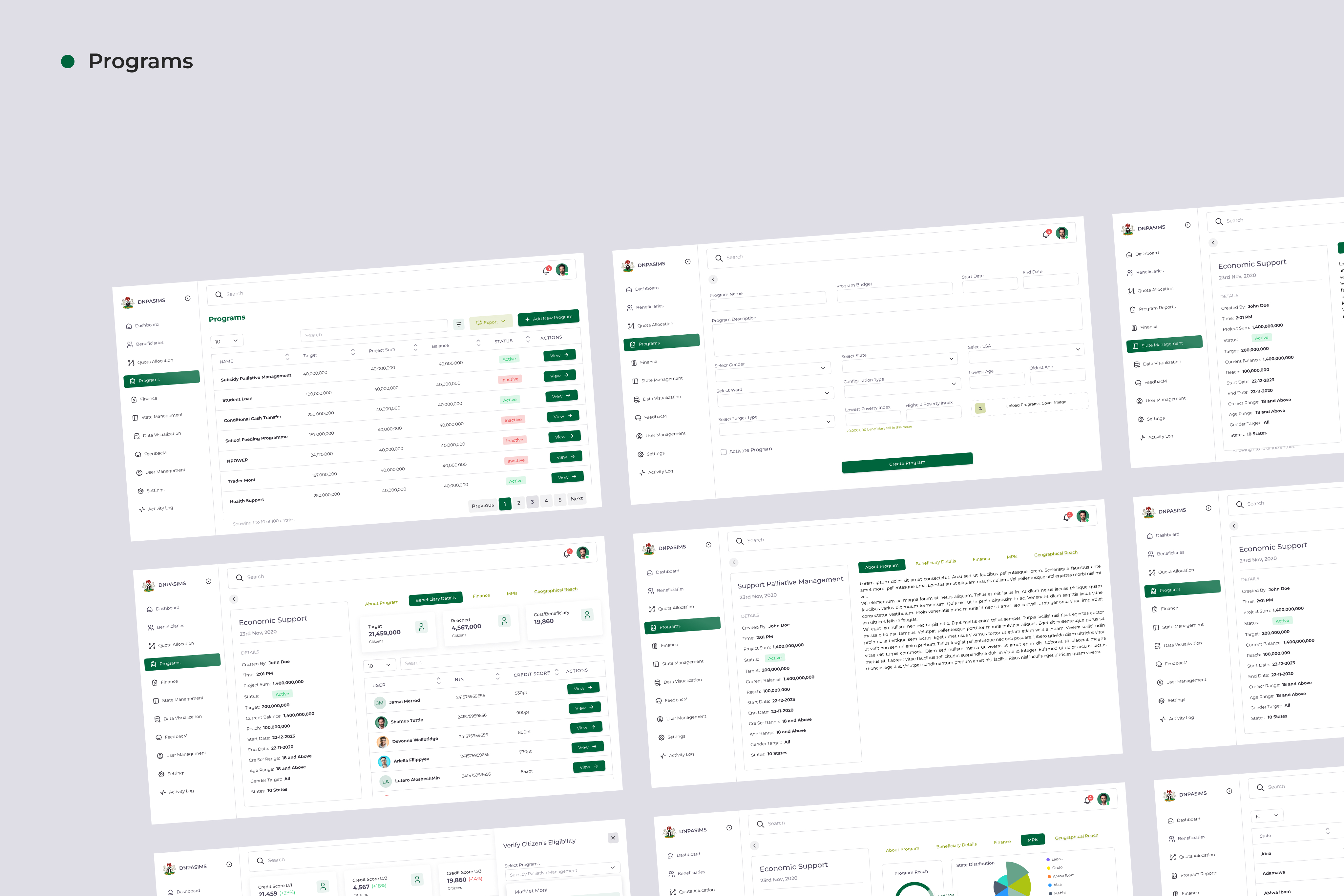
Palliative Programs
For the Programs section, it is where new social intervention initiatives are created, updated, and monitored. Each program is defined with specific objectives, timelines, target demographics, funding sources, and success indicators. From here, administrators can launch, pause, or archive programs and measure reach and impact.
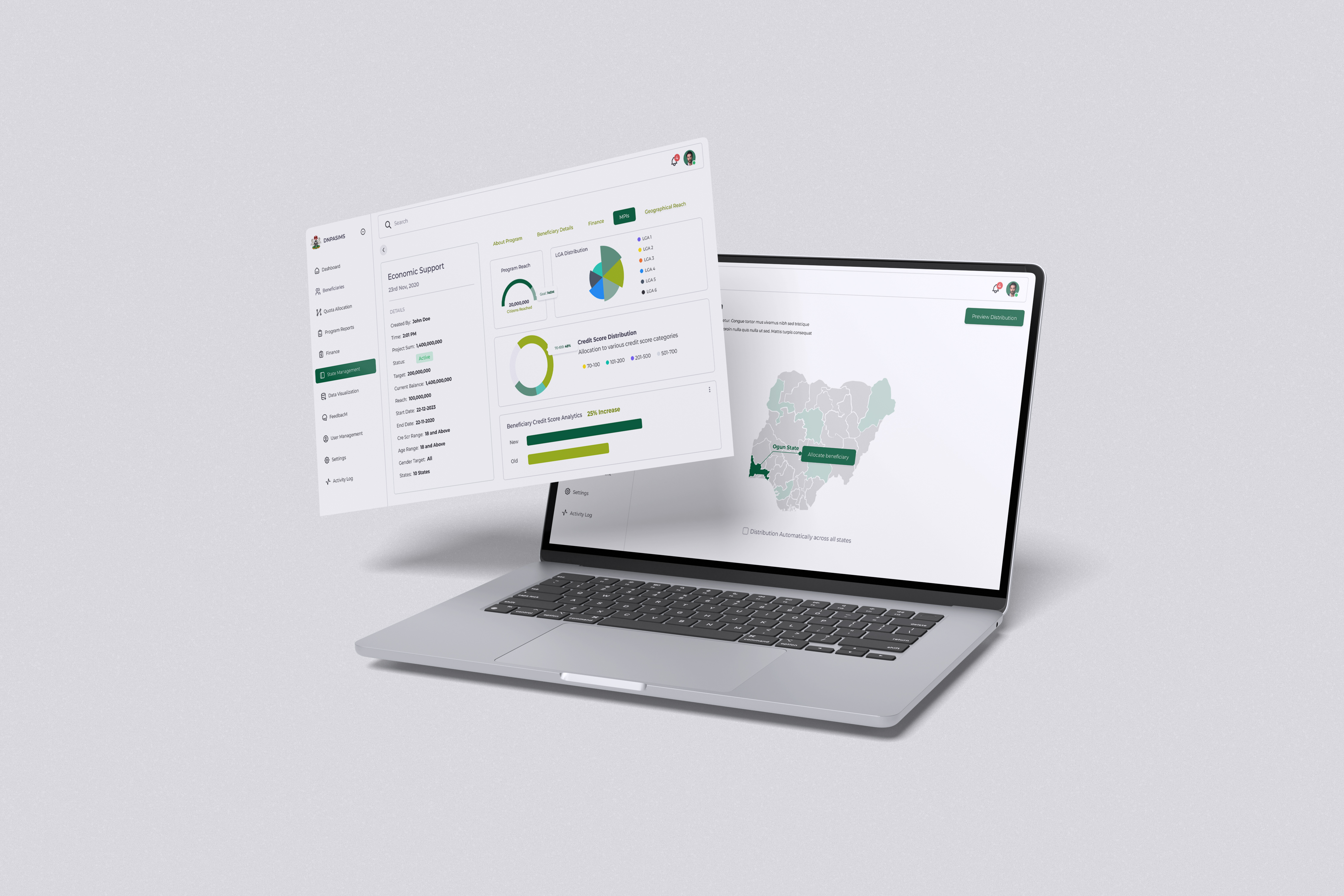
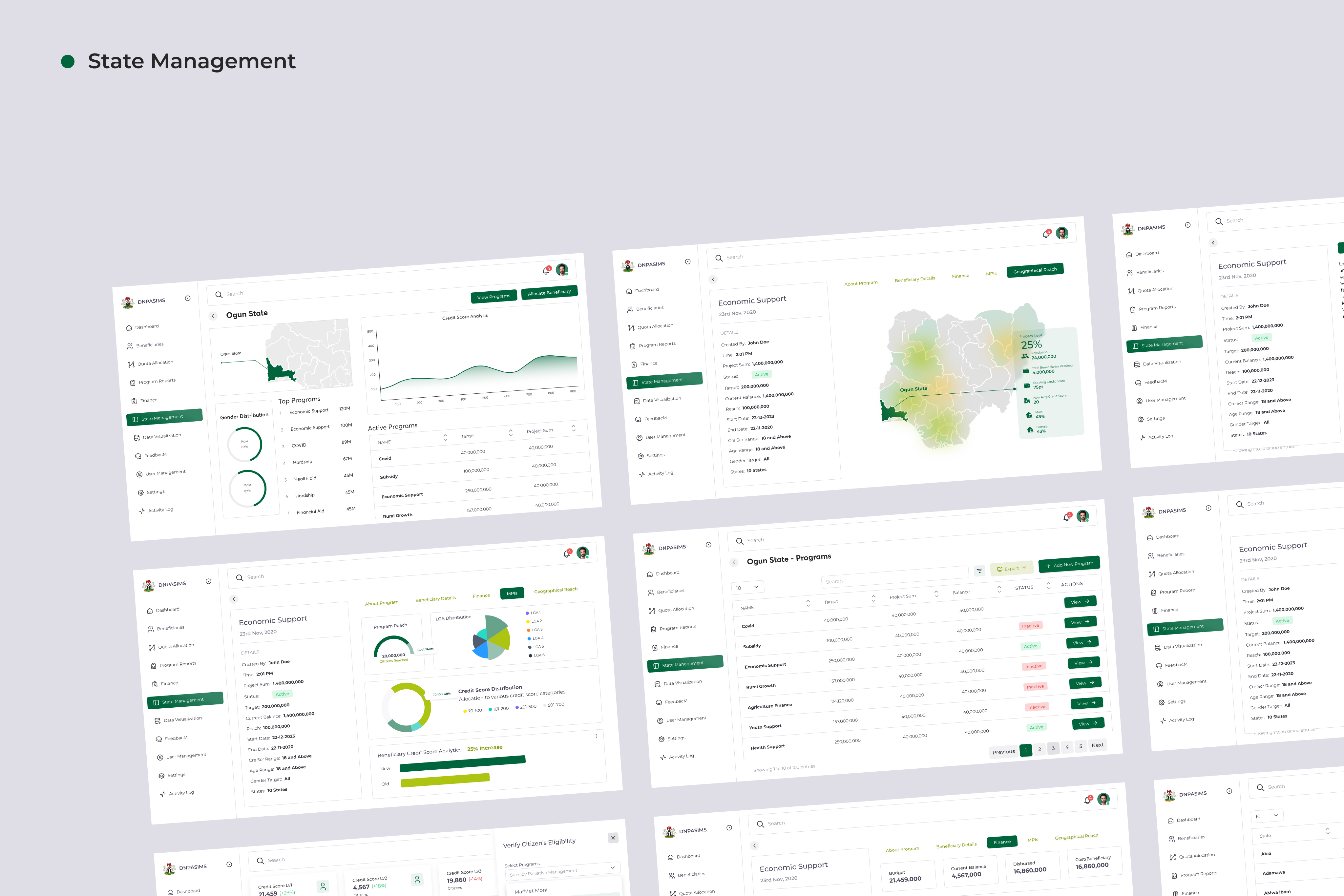
State & Local Government Palliative Management
The State Management module helps oversee and coordinate palliative distributions across different states and their respective local governments, ensuring organized, accountable, and traceable delivery at every administrative level.
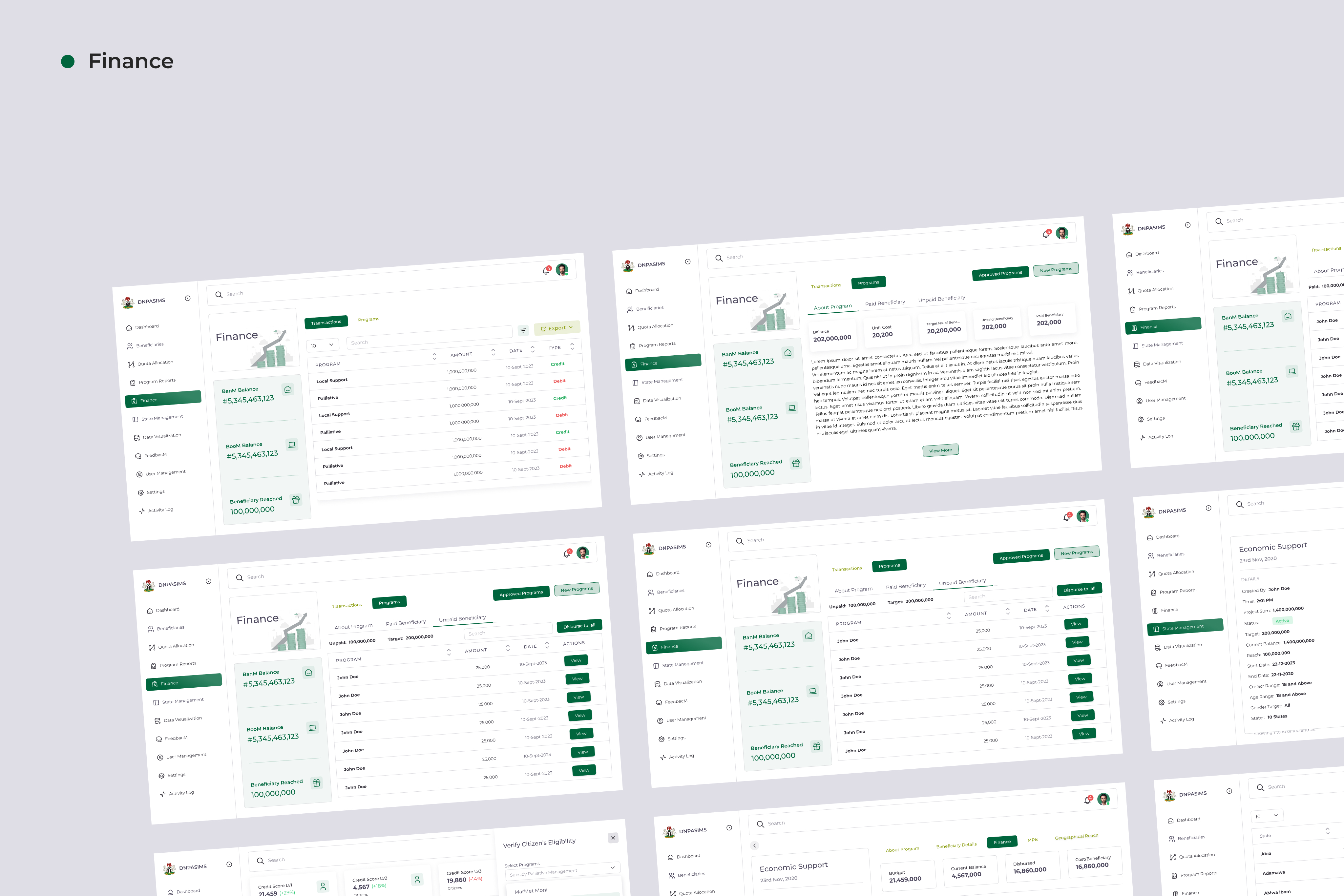
Finance
The Finance module centralizes all monetary data—budget allocations, disbursement tracking, and transaction summaries. This section ensures financial accountability and provides downloadable reports for audits or internal reviews.

Opportunities For Improvement
While the system may set a strong foundation, there’s room to enhance its impact. Introducing USSD access would help bridge the digital divide, especially in rural areas with low internet penetration. We also see an opportunity to embed biometric verification for beneficiaries, ensuring better fraud prevention and one-person-one-benefit integrity.
On the administrative side, AI-powered anomaly detection could help flag unusual disbursement patterns in real time. Finally, expanding the public transparency portal to include visual success stories, testimonials, and open datasets could build even more citizen trust and encourage stakeholder engagement at scale.
I’m open to jobs, collaborations, freelance gigs, or meaningful conversations.